Exploring Vegan and Plant-Based Thai Restaurants: A Flavorful and Healthy Dining Experience
Thai cuisine, renowned for its vibrant flavors and aromatic spices, has long been a favorite for food lovers around the world. The combination of sweet, sour, salty, and spicy ingredients makes Thai dishes both complex and satisfying. In recent years, there has been a surge in the popularity of vegan and plant-based Thai restaurants. These establishments cater to the growing demand for plant-based alternatives while staying true to the traditional essence of Thai food. In this article, we’ll delve into what makes a Vegan Thai Restaurant unique, the health benefits of enjoying such meals, and offer a delicious recipe to try at home.
What Makes a Good Vegan or Plant-Based Thai Restaurant?
A great vegan or plant-based Thai restaurant retains the bold flavors of traditional Thai cooking, with a focus on fresh, plant-based ingredients. The hallmark of a quality establishment is its ability to recreate the same depth and complexity of flavor that you’d find in non-vegan versions of Thai dishes. For instance, instead of using fish sauce, which is a staple in many traditional Thai recipes, plant-based Thai restaurants use vegan alternatives such as soy sauce, miso, or mushroom-based seasonings to create the same savory umami.
Another defining feature of top-tier vegan Thai eateries is the creativity and authenticity of their dishes. These restaurants don’t simply rely on tofu as a meat substitute; they showcase the diverse range of vegetables, legumes, and grains native to Thailand. Dishes like Thai green curry, pad Thai, and spring rolls can easily be adapted to a plant-based version, allowing customers to enjoy a satisfying meal without compromising on taste or texture.
Furthermore, a good vegan Thai restaurant will prioritize fresh, local ingredients. Thai cuisine is deeply rooted in the use of fresh herbs and vegetables such as lemongrass, galangal, kaffir lime leaves, and basil, which bring a vibrant, aromatic quality to dishes. Vegan restaurants, therefore, often have an edge in offering meals that are not only plant-based but also nutrient-dense and packed with antioxidants.
The Health Benefits of Vegan or Plant-Based Thai Food
Vegan and plant-based Thai food offers numerous health benefits, making it an excellent choice for those looking to improve their diet. Traditional Thai cuisine includes a wide variety of vegetables, herbs, and spices, many of which have medicinal properties. For example, ginger, turmeric, and chili peppers are commonly used in Thai dishes and are known for their anti-inflammatory and immune-boosting properties.
Plant-based diets are also associated with a reduced risk of chronic conditions such as heart disease, diabetes, and obesity. By removing animal products from the diet, vegan Thai meals are typically lower in saturated fats and cholesterol. They tend to be higher in fiber, which aids digestion, supports heart health, and helps maintain a healthy weight.
Moreover, many plant-based Thai dishes are naturally gluten-free, providing options for people with dietary restrictions. Thai food’s focus on fresh vegetables, whole grains like rice, and legumes means it is rich in essential vitamins, minerals, and antioxidants that promote overall well-being.
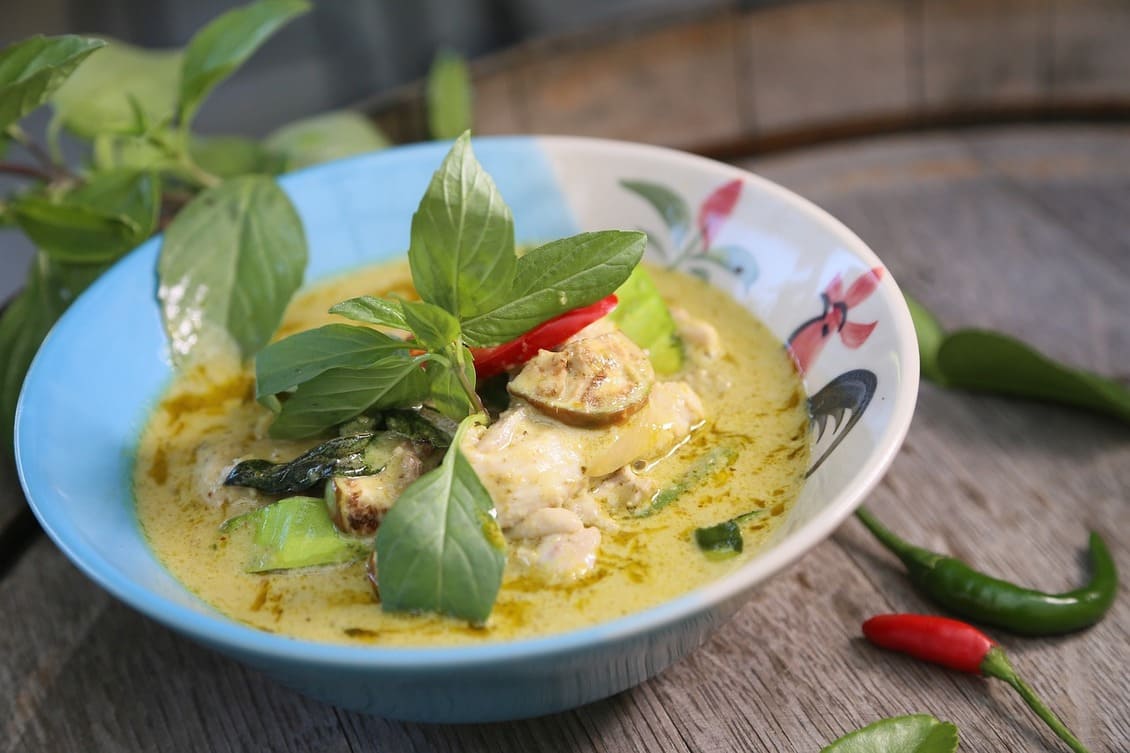
A Vegan Thai Recipe: Thai Green Curry with Tofu and Vegetables
Here’s a simple yet delicious recipe for vegan Thai green curry that you can recreate at home. This dish is loaded with fresh vegetables, aromatic herbs, and a rich, creamy coconut milk base.
Ingredients:
- 1 block of firm tofu, drained and cubed
- 1 tablespoon coconut oil
- 1 onion, sliced
- 2 cloves garlic, minced
- 1 tablespoon grated ginger
- 2 tablespoons green curry paste (ensure it’s vegan)
- 1 can (400ml) coconut milk
- 1 cup vegetable broth
- 1 small eggplant, chopped
- 1 bell pepper, sliced
- 1 cup baby carrots, sliced
- 1 zucchini, sliced
- 1 cup broccoli florets
- 2 tablespoons soy sauce or tamari (for a gluten-free option)
- 1 tablespoon lime juice
- Fresh basil leaves (for garnish)
- Cooked jasmine rice (for serving)
Instructions:
- Heat the coconut oil in a large pan over medium heat. Add the tofu cubes and sauté until golden brown and crispy on all sides. Remove and set aside.
- In the same pan, add the onion, garlic, and ginger. Cook for 3-4 minutes until fragrant.
- Stir in the green curry paste and cook for 1-2 minutes, allowing the flavors to develop.
- Pour in the coconut milk and vegetable broth, stirring well to combine. Bring to a simmer.
- Add the eggplant, bell pepper, carrots, zucchini, and broccoli. Let the curry simmer for 10-12 minutes, until the vegetables are tender.
- Stir in the soy sauce and lime juice. Return the tofu to the pan and simmer for another 2-3 minutes.
- Serve the curry over jasmine rice and garnish with fresh basil leaves.
This green curry is a perfect example of the rich, vibrant flavors found in vegan Thai cooking, offering a comforting meal that is both nutritious and satisfying.
Conclusion
Vegan and plant-based Thai restaurants are a testament to the versatility and richness of Thai cuisine. By embracing plant-based ingredients, these restaurants are not only making Thai food accessible to those following a vegan or plant-based diet but also offering health-conscious options for all types of diners. The combination of fresh, flavorful ingredients and the health benefits of a plant-based diet makes vegan Thai cuisine a great choice for anyone looking to nourish their body while enjoying delicious food. So, whether you’re a vegan, a health enthusiast, or simply a lover of Thai food, these restaurants are sure to offer a satisfying and flavorful dining experience.